
I Was Hit Standing Off the Road — Why Work Zone Safety Needs a Wake-Up Call

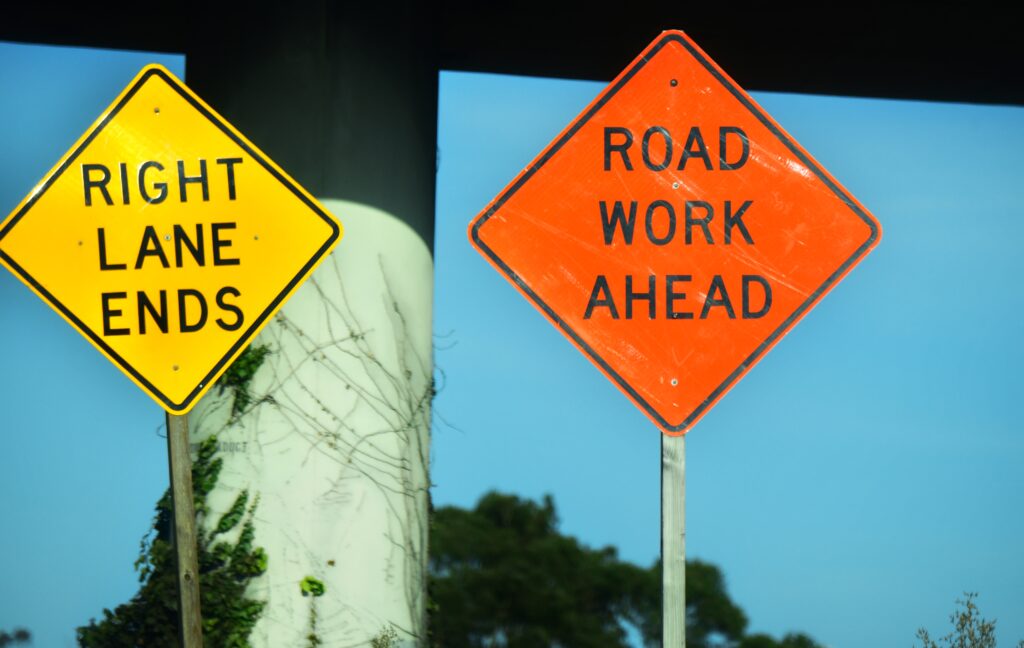
By Matthew Brown, CTL Engineering
I didn’t think I was in harm’s way.
I wasn’t walking in traffic. I wasn’t standing in a live lane. I was off to the side of the road—clear of the active travel path—just trying to do my job as a construction inspector.
Then it happened.
A distracted driver, drifting just a little too far off the road, hit me. No warning. No screeching brakes. No horn. Just sudden impact and chaos.
I survived. Some people don’t.
And that’s exactly why I’m sharing this—because this wasn’t just a freak accident. It was the result of something we see every day on job sites across the country: the dangerous gap between how the public thinks work zones operate and how they actually work in the field.
As an engineer and inspector with CTL Engineering who primarily works on highway and roadway projects, I’ve seen this from every angle—on paper, in design plans, and standing inches from high‑speed traffic. What happened to me is part of a much bigger problem.
The Illusion of Safety in Work Zones
If you’ve ever worked in highway construction, you know the feeling. Vehicles fly past at 60, 70—even 80 miles per hour—just feet away from where we’re standing. There’s often little more than a cone, a vest, or a sign between you and a distracted driver.
From the outside, people might think those safety measures are enough.
They aren’t.
Not when the driver isn’t paying attention.
Not when there’s no real barrier.
Not when standing “off the road” still puts you directly in the path of a drifting vehicle.
There’s a common misconception that if workers are not standing directly in front of heavy equipment or in the lane where traffic is flowing, they’re “safe.” My experience proves otherwise. A vehicle doesn’t have to cross fully into a lane closure to hit someone; it only has to drift a few feet.
What happened to me wasn’t rare. It was just the kind of incident we all fear—but hope won’t happen to us.
The Hidden Work of Field Assessment
Highway work isn’t just about pouring concrete or placing asphalt. A lot of it is inspection, evaluation, and documentation—tasks that often put inspectors and engineers close to live traffic.
Not long ago, I was called out to a site where a dump truck had driven down the freeway with its bed still raised and struck an overhead sign truss on I‑70.
My role that morning was to:
- Inspect the sign truss for structural damage
- Evaluate the foundation
- Determine whether the situation called for minor repair or major replacement
I was standing a few feet off the highway, next to a structure whose foundation might extend dozens of feet below ground, with electrical conduits and lighting that keep that sign visible at night.
What I determined out there could mean the difference between:
- A small change order of a few thousand dollars, or
- A major one in the hundreds of thousands of dollars
This kind of evaluation can’t be done from behind a desk. It has to be done in the field—which means standing close to live traffic, often with no physical barrier between me and vehicles traveling at highway speeds.
And that’s exactly where I was in another work zone—off to the side, “out of traffic,” doing my job—when a driver hit me.
Speeding and Distraction
At highway speeds, your vehicle can cover hundreds of feet in a matter of seconds.
If you look down at your phone—for a text, a notification, or to change a song—those few seconds are often more than enough distance to reach a worker you never really saw.
Workers don’t have the luxury of stepping behind a barrier every time a driver glances away. Many of us are measuring, inspecting, documenting, guiding equipment and watching traffic patterns in real time.
All it takes is one distracted driver in that few‑second window.
The belief that driving “just a little faster” or looking away “for just a moment” has no real consequences is one of the most dangerous assumptions on our roads—especially in work zones.
What the System Still Gets Wrong
We’ve made progress in safety protocols over the years, but incidents like mine—and worse—prove we’re not there yet. From my perspective as an inspector in active highway work zones, here are some of the gaps that remain:
- Inadequate Buffer Zones
In some locations, there’s simply not enough space between crews and traffic. Sometimes roadway geometry or existing conditions limit options—but too often, we’re working with minimal lateral clearance. Even a minor drift can have major consequences. - Rampant Driver Distraction
Phones, in‑vehicle screens, navigation systems, and simple mental fatigue keep drivers from giving the road their full attention—especially in areas they travel regularly and think they “know.” - Weak Enforcement and Understanding
We post reduced speed limits in work zones. We put up signs that warn “Fines double in work zones” and “Injury or death can lead to fines and jail time.” But many drivers never truly absorb the message. They pass the signs quickly or assume the rules only matter if they see workers right in front of them.
In my own case, inspectors questioned why I was on one side of the highway when the visible work appeared to be on the other. That moment highlighted a broader issue: even some responders don’t always recognize that the entire signed work zone—from “Begin Work Zone” to “End Work Zone”—is active, regardless of where workers are at a given moment.
- Lack of Physical Protection
Cones and barrels are helpful for guiding traffic, but they are not true protection. Not every project can use concrete barriers, but when the decision not to use additional protection is made, safety should be a central part of that conversation. - Limited System‑Level Support
Navigation apps routinely warn drivers about slow‑downs or police presence. We need that same level of visibility and urgency for active work zones, where the stakes are just as high.
This Is Not Just My Story
My incident is one example. Others end far worse.
Earlier this year, a colleague from another consulting firm—another inspector—was leaving a work zone at night. He was hit by a pickup truck that was driving with no headlights on.
He didn’t survive.
He died in the hospital from complications related to the crash.
He was 30 years old.
These are not abstract statistics. They are people with families, careers, and lives built around making our transportation system safer and more reliable.
What Needs to Change
No one should get hurt—or worse—just doing their job. Here are some key changes that can make work zones meaningfully safer.
- Smarter Work Zone Design
We need to design with drift and distraction in mind—not just ideal driver behavior.
That means:
- Creating larger buffer zones where feasible
- Shifting traffic away from workers earlier, not at the last second
- Being realistic about where people will actually stand and work, not just where they appear in plans
- Recognizing that inspectors, engineers, and supervisors move throughout the site, not just within a single “safe” area
Even a small deviation in a driver’s path can have serious consequences when workers are close to live traffic.
- Embrace Safety Technology
Safety technology isn’t a luxury anymore—it should be part of the standard approach to high‑risk work zones.
Tools like:
- Radar‑triggered signs that display vehicle speeds
- Connected work zones that push alerts to navigation systems
- Wearable alert systems that warn workers when a vehicle encroaches on a buffer area
can give both drivers and workers critical extra seconds to react. The technology exists; we need to use it more consistently.
- More Physical Barriers
Wherever possible, we should use physical barriers to separate workers from live traffic—not just cones or barrels.
Concrete barriers, water‑filled barriers, and other protective systems:
- Provide a real line of defense if a driver drifts or loses control
- Help define clearer, more forgiving spaces for workers to operate in
- Turn a potential fatal collision into something survivable
Not every location can accommodate full barrier systems, but when decisions are made about whether or not to use them, safety should carry as much weight as cost and convenience.
- Stronger Driver Accountability
We can’t talk about work zone safety without talking about driver behavior.
We need:
- Consistent enforcement of reduced work zone speed limits
- Meaningful consequences for speeding and distraction in work zones
- Ongoing public education that shows the real risks—not just fines, but lives
At highway speeds, a vehicle can travel hundreds of feet in a matter of seconds. If a driver looks down, that can be the distance between a near miss and a life‑changing impact.
Changing that reality starts with making it clear that work zones are not just another stretch of road—they’re shared spaces where one person’s decisions can determine whether someone else makes it home.
This Is Personal — and It’s Professional
I’m not sharing this for sympathy. I’m sharing it because I lived it—and I shouldn’t have this story to tell. My coworkers shouldn’t have to wonder if today is the day someone looks away from the road for a few seconds too long.
To drivers:
Slow down. Pay attention. When you see orange barrels, cones, or a person in a reflective vest, assume:
- Someone is closer to live traffic than you think.
- Your reaction time is longer than you think.
- Your vehicle will travel farther in a few seconds than you think.
To companies, agencies, and policymakers:
Let’s not wait for another incident before we push harder. We can:
- Design safer work zones
- Invest in better protection and technology
- Strengthen enforcement and education
- Treat work zone safety as a standard we live by, not a box to check
Final Word: Let’s Make Safety Real
Policies are only as strong as the actions that follow. Work zone safety shouldn’t be a box we check—it should be a standard we live by.
I got hit standing off the road.
No one else should have to say the same.
